Whitman’s flowers
Where the twelve ornaments of Whitman’s 1860 Leaves of Grass come from in the book, and how stanza drew them.
These twelve ornaments come from the 1860 edition of Leaves of Grass (Boston: Thayer and Eldridge). Ten are from its pages. The last two, the sun rising over the sea with its arch and without, are from the brass stamp that pressed it into the back cover, now at the Library of Congress. Writers on stanza can add any of them to a poem.
1. The book of 1860
Whitman learned the trade of compositor as a boy, and he worked beside the printers of his own books.1 For the third edition of Leaves of Grass he spent the spring of 1860 in Boston. His publishers, he wrote, “just took me to the stereotype foundry, and given orders to follow my directions,” and he spent “about three hours a day at work in the printing office,” reading proofs.10 He carried a notebook listing the typefaces he wanted.1 Two leaves of that list, and one of the faces it names, are in How Whitman made his books. The book was electrotyped at the Boston Stereotype Foundry and printed by George C. Rand and Avery.3 Ed Folsom calls the result a “wildly mixed typographical volume.”1
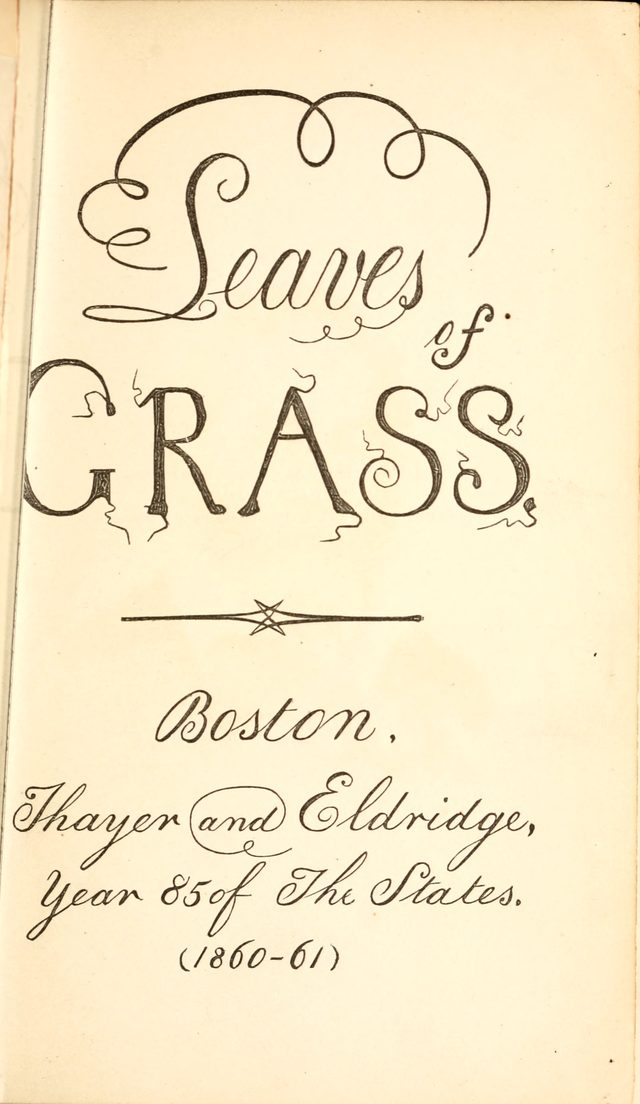
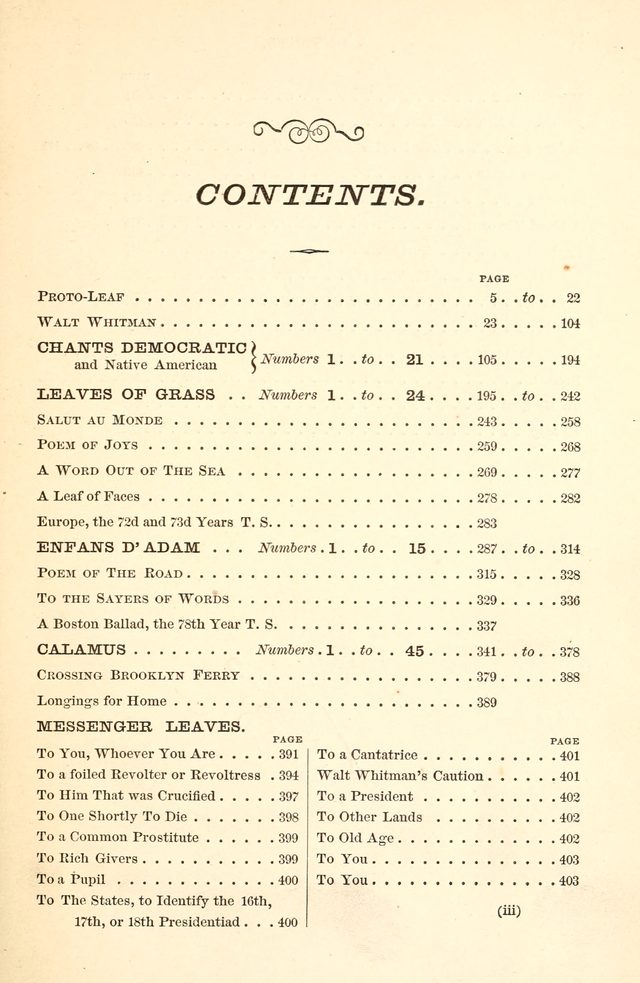
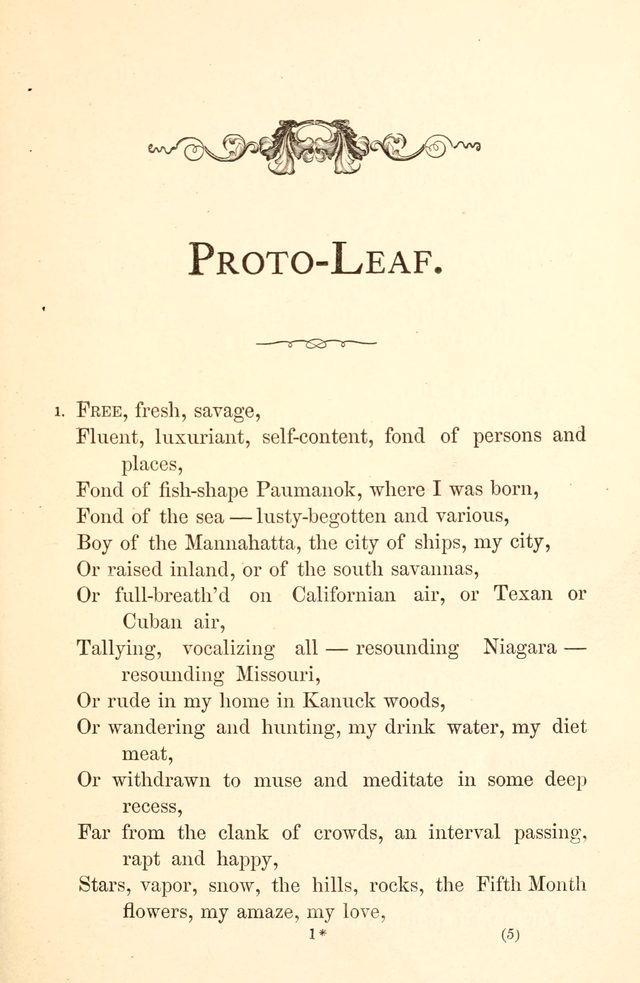
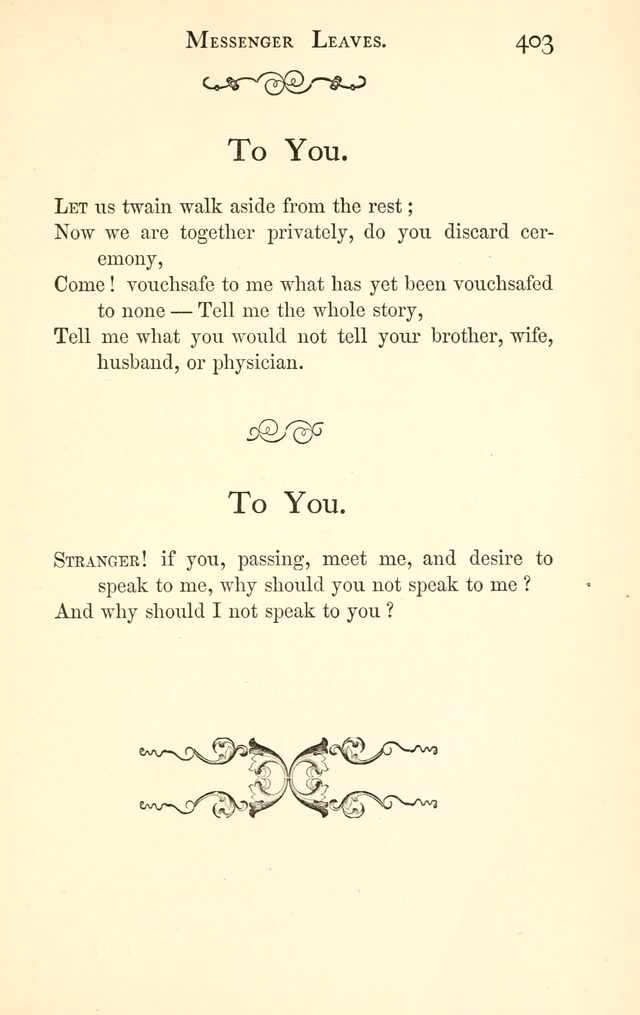
Its title page sets Leaves in a flourished script and Grass in capitals that sprout tendrils, with a starred rule under them. Head-pieces of scrolls and acanthus leaves open the contents and the first poem, with a short rule under the poem’s title. Flowers stand between poems, and a large tail-piece ends the group “Messenger Leaves” on page 403.2
On May 10 he wrote to his brother Jeff, “The typographical appearance of the book has been just as I directed it.” The foreman of Rand’s press room called it “the freshest and handsomest piece of typography that had ever passed through his mill,” and Whitman added, “It is quite ‘odd,’ of course.”1,11
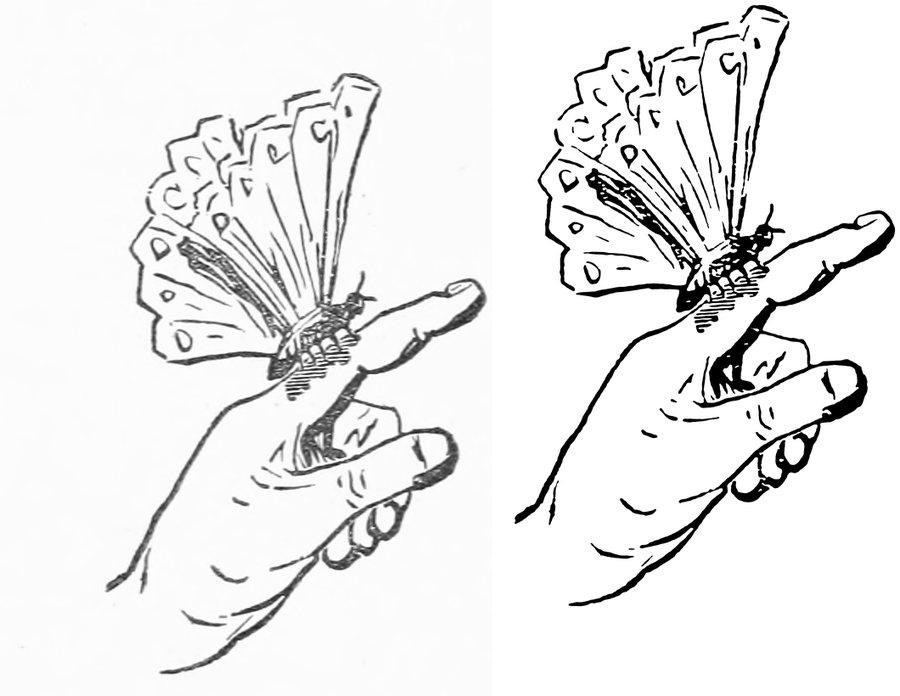
The binding carried three emblems: a globe floating in clouds on the front cover, a hand with a butterfly perched on its pointing finger on the spine, and a sun over the ocean on the back.1 Folsom reads the butterfly as an “emblem of the union of man and nature, of the body and the soul.” The sun “could be either rising or setting,” he notes; we call it rising, as the Library of Congress’s catalogue does.1,5 “The emblems on the cover,” he writes, “are repeated throughout the book.”1 There they are printed in ink, as lines alone on the page: the butterfly at the end of the table of contents, of “Europe,” and of the last poem, “So long!”; the sun at the end of four poems; the globe at the end of five.2,7
2. Where each one comes from
- Whitman’s butterfly. From page iv, where it ends the table of contents.
- The starred rule. From the title page.
- A short rule. From page 5, under the title of the first poem, “Proto-Leaf.”
- A short rule, its middle a diamond. From page iii, under the heading Contents.
- Acanthus between scrolls. From page 5, at the head of the first poem, “Proto-Leaf.”
- Scrolls about two rings. From page iii, at the head of the table of contents.
- A flower between poems. From page 403, between the two poems called “To You.”
- The tail-piece. From page 403, where it ends “Messenger Leaves.”
- The globe on a cloud. From page 258, where it ends “Salut au Monde!” The book prints it five times.
- The sun rising over the sea. From page 242, below the poem that ends “So long — and I hope we shall meet again.” The book prints it four times.
- The sun rising over the sea, drawn from the cover’s stamp. From the brass stamp that pressed it into the back cover, drawn line for line with its arch left out.
- The sun rising over the sea, as stamped on the cover. From the brass stamp that pressed it into the back cover.
3. How stanza drew them
The pages were photographed by the Internet Archive in 2010, at 500 pixels to the inch, from a copy in the Lincoln Financial Foundation Collection. Of the open copies online, it prints the cleanest.2 It is most likely not a copy of 1860 itself. Thayer and Eldridge failed by the end of 1860, and the book’s plates were stored; in 1879 they were sold at auction in New York, where Richard Worthington bought them, and by early 1880 he was printing the book from them.1,12 Since 1922 bibliographers have told his printings by the printers’ name missing from the back of the title page, a test the Bibliography of American Literature calls probable, not certain: Thayer and Eldridge may have dropped the name themselves by June 1860.3,13,14 This copy lacks the name too. Its reddish-brown cloth fits Worthington’s, but proves little; Thayer and Eldridge’s own came in as many as twelve colors and cloths.13 Whitman was offered the plates before the sale and turned them down; he would not allow them “to be used by any one else,” he wrote in 1880.12 So the designs and the plates are his, and the impressions we traced are from a later printing of them. They still show what the plates held.
Each ornament was drawn the way stanza drew William Caslon’s flowers of 1766 (Printers’ flowers, and how stanza found them), with one difference. Caslon’s specimen prints each flower many times, and stanza took the median of its impressions. Each of Whitman’s was drawn from a single impression. The paper’s tone was taken out, the ornament was enlarged and smoothed, and its shape was cut where it holds as much ink as the print does. Its outline was then traced.4
Caslon’s flowers are cut solid. Whitman’s are engravings, made of lines much finer than the strokes of the letters beside them, and at a poem’s size on a screen, lines that fine turn grey. So that they would not, the first drawings thickened every line to at least the weight of the words’ finest stroke.
4. Drawn finer
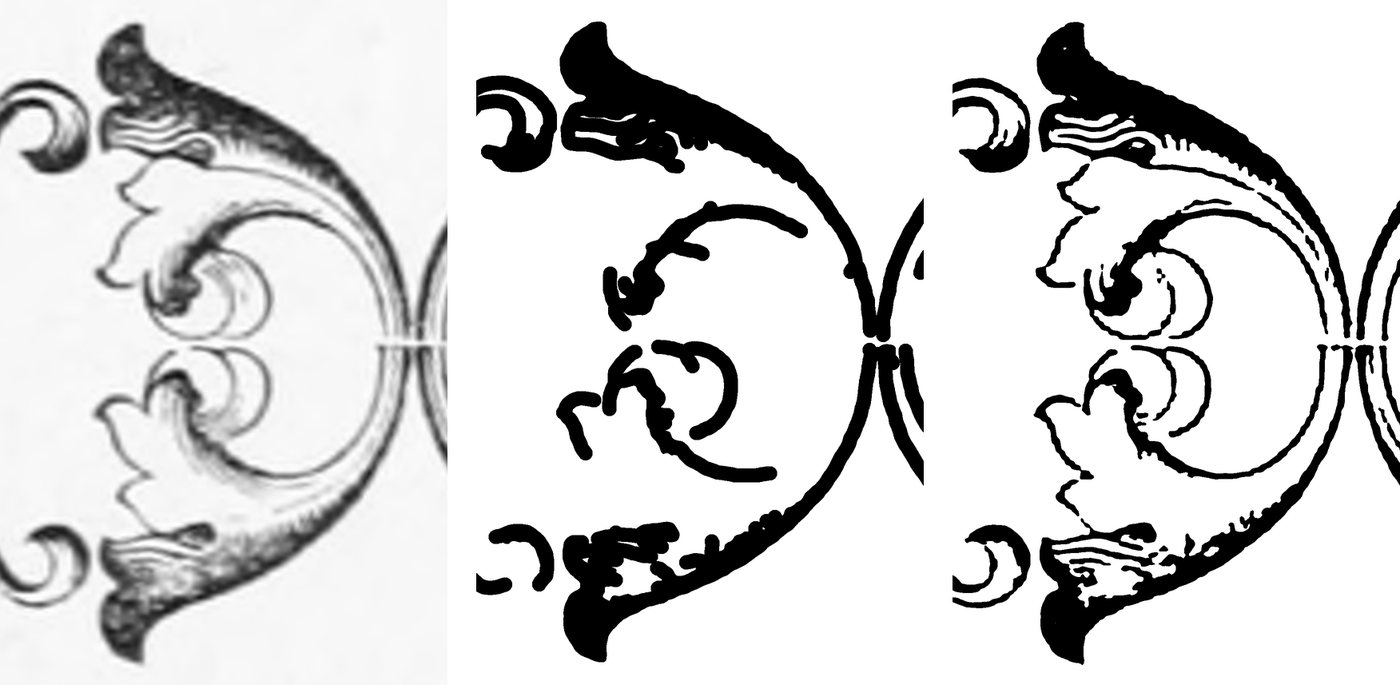
The first nine went online that way on the morning of November 1, 2026. Seen large, they had lost detail. On the tail-piece, the hatching had swelled into blots, and the paired buds at its middle no longer closed.
Seven of them were drawn again the same morning. Nothing in them is thickened now. A line of hatching is kept where it is darker than the gaps beside it, faint hairlines are kept where they join the drawing, and the small holes in solid ink are filled. Each new drawing was checked over the printed page, its ink within 9 percent of the print’s. The butterfly stays as first drawn. On a phone or a computer with a sharp screen, the tail-piece’s buds show at a poem’s size; on other screens the two drawings look almost alike.
5. The sun rising over the sea
The 1860 book has the sun in two forms. On the back cover it is pressed into the cloth. Inside, it is printed in ink at the end of four poems: “Leaves of Grass” number 24 on page 242, “Calamus” number 45 on page 378, “Debris” on page 425, and “Burial” on page 448.7 Two different tools made them.
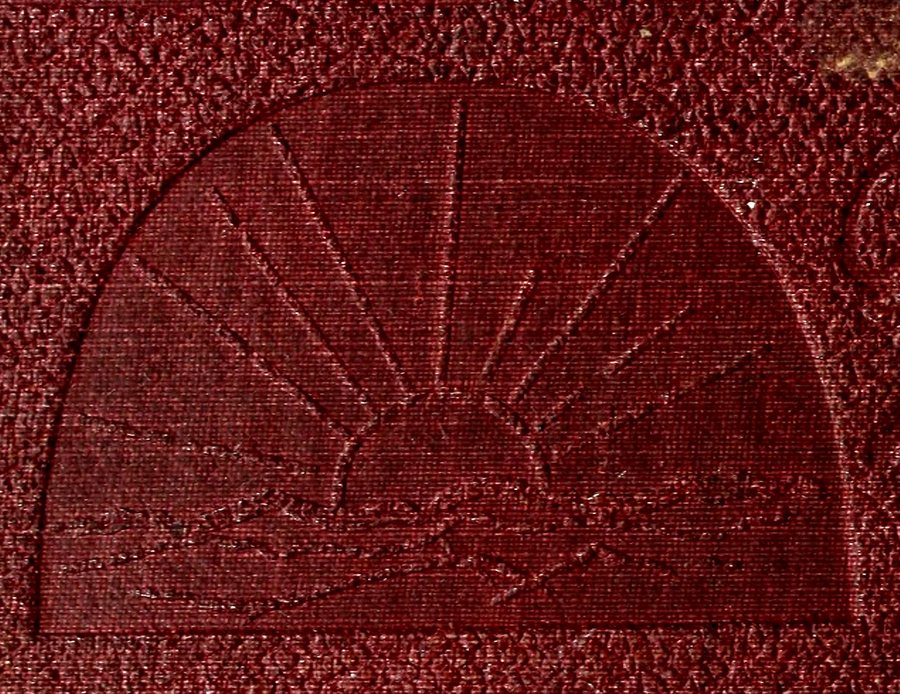
On the cover, a brass stamp made it.
The stamp is heated and brought down on the cloth. Its face (in red) is flat, and the sun’s lines are cut into it.
Pressed hard, with no ink or gold, the face pushes the cloth down. Under the lines the cloth is not touched, so it stays up.
Lifted, it leaves a sunken arch with the lines standing up inside it, the same color as the rest, seen only by their shadows.
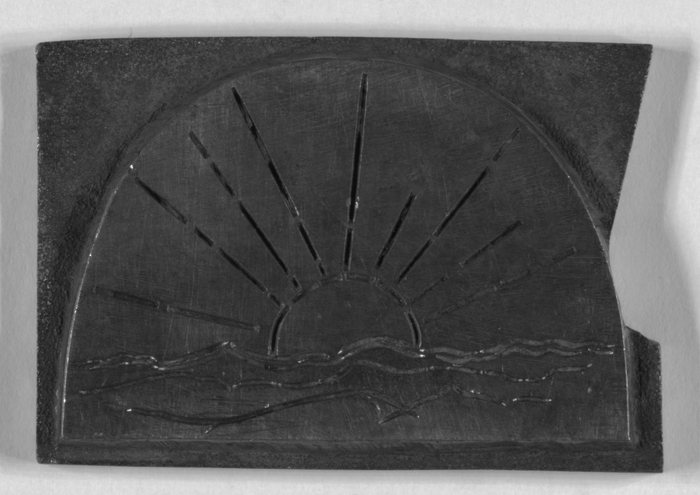
Inside the book, a printing block made it, set with the page’s type and moulded with it into the plate the page was printed from.7
The block for the page has only the sun’s lines standing up. Ink is rolled over it and sits on the lines alone.
The paper is pressed down onto the inked lines.
Lifted, the paper has black lines where the lines touched it. Nothing else touched it, so there is no arch.
Binders also call a stamp a die or a block; in this paper the stamp is the cover’s and the block the page’s.5,6 The stamp and the block are both cut backward, as a rubber stamp is, so that what they press reads the right way round. That is why our photograph of the stamp is flipped.
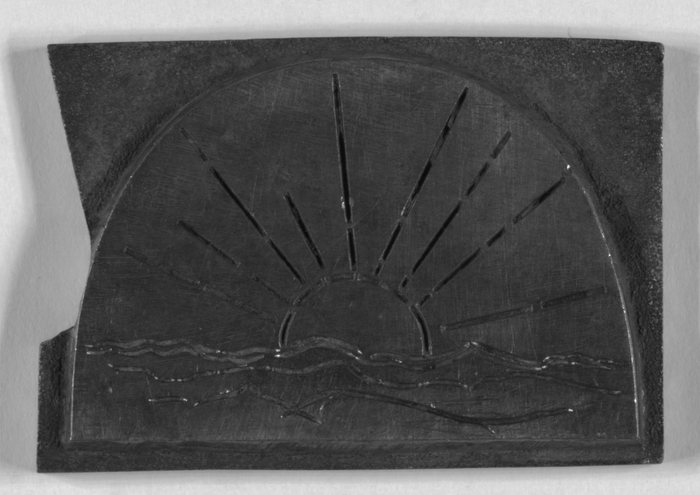
The arch was made on purpose. On the stamp the face is raised and polished, with a bevelled edge, and the brass around it is lower and rough. The Library of Congress calls the set “cast dies”; from a photograph we can’t tell how the stamp was made. The same set of stamps has Leaves and Grass as raised letters standing alone, so a stamp of the sun’s lines alone could have been made.5,8 Who chose the arch for the cover, and why, no source says. The covers we could see and those described to us are stamped blind; we found none in gold.1,2,9 What the page’s block was made of, and who drew the sun, we have not found. How a binder of the time pressed a cover with a stamp, and how such stamps were made, is in How Whitman made his books.
We drew the sun first from the stamp, and drew its face as solid ink, as if the stamp had been inked and printed. That made it look like a transom window over a door, and we asked whether Whitman meant it that way. Looking for an answer, we found the four printed pages. So we drew the sun three ways: traced from page 242, from the stamp without its arch, and from the stamp with it, as first drawn.
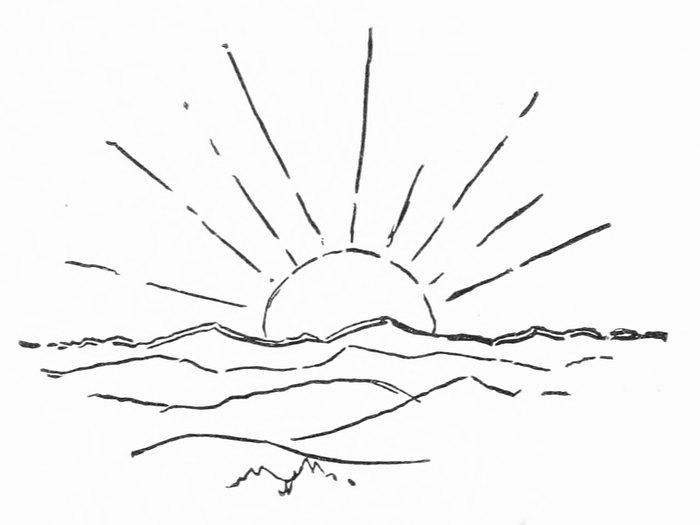
Page 242The stamp, flippedLook at the waves. The page and the stamp share the sun and its nine rays, line for line, but the waves are where they differ most. Below the horizon, page 242 has four lines of waves and a small jagged mark under them, running nearly the width of the picture. The stamp has three, stopped short by its arch, and no mark. So the block and the stamp look to have been cut separately, and nothing says who cut either. The drawing traced from page 242 has the page’s waves; the two drawn from the stamp have the stamp’s, drawn by eye, because the stamp’s wave lines are scratched and did not trace.
Traced exactly, the sun from page 242 fades at a poem’s size on an ordinary screen: its lines are thinner than the screen’s pixels and turn grey. On a sharp screen, such as a phone’s or a Mac’s, its lines stay whole, though pale. With its lines held to the weight of the words’ finest stroke, as the first drawings were, it stays dark on both. Its lines stand apart, with no hatching between them to fill in, so holding them loses nothing.
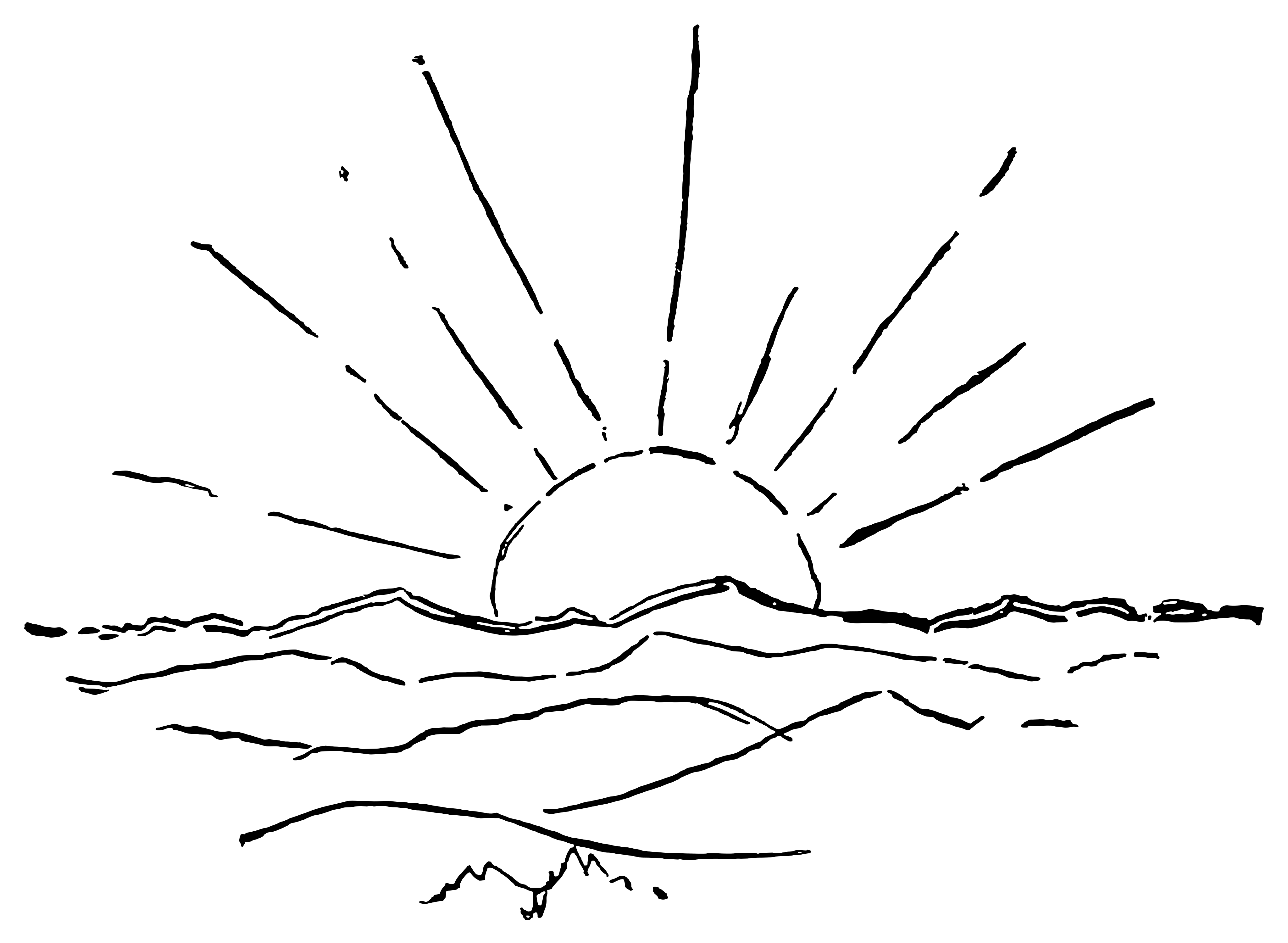 Traced exactly
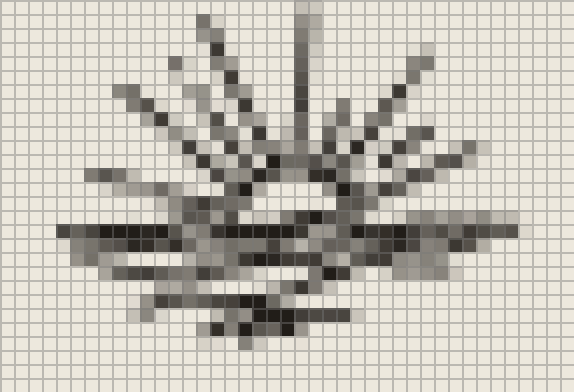
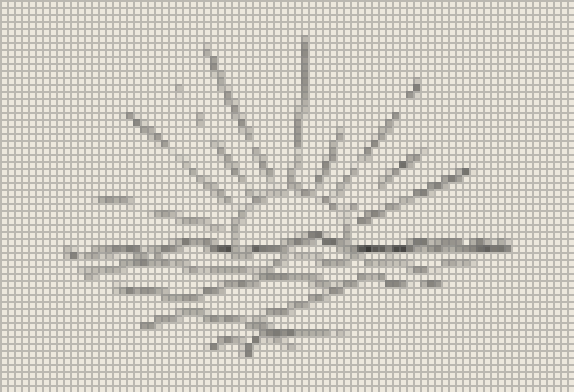
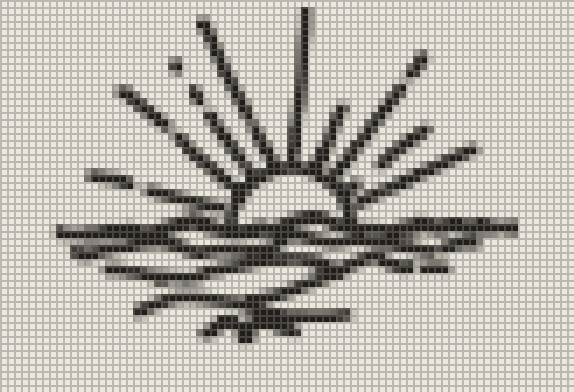
All three are offered, the sun from page 242 first. It is the sun as the book prints it, beside the poems. The two from the stamp are there for a writer who wants the cover’s.
6. In stanza
The twelve are a face of their own, Stanza Fleurons 1860, beside Caslon’s of 1766. Its outlines are stanza’s own, drawn from designs in the public domain, and published under the SIL Open Font License, so anyone may use them.
A writer finds them in the composer under Flowers, as Whitman’s, from Leaves of Grass, 1860, and sets them as any of stanza’s flowers. Share’s pictures and the PDF draw them too.
Under Border, among the Rules, is Whitman’s triple rule: a fine rule, a heavy one, and a fine one, after the gilt frame on the cover of the first Leaves of Grass, Brooklyn, 1855.6 stanza draws it in the page’s ink.
7. What we don’t know
Some questions the sources don’t answer. Each is set down here with what we know, what we don’t, and what would settle it.
- Whether the sun is rising or setting. We call it rising, as the Library of Congress’s catalogue does (“[Sunrise …]”), though its subject heading, “Sunrises & sunsets,” leaves both open. Ed Folsom says it “could be either rising or setting over the ocean,” and the picture can’t say.1,5 A word of Whitman’s or his publishers’ naming it would settle it; we have not found one.
- Which copy we drew from. The pages are most likely from Worthington’s reissue of about 1880, printed from the 1860 plates without Whitman’s leave: the copy lacks the printers’ name, the test bibliographers use, which is probable, not certain.3,12,13,14 The designs and the plates are Whitman’s either way. Kenneth M. Price’s copy, which the Walt Whitman Archive shows, has the printers’ name; its pages laid beside ours, or Joel Myerson’s descriptions of Worthington’s printings set against this copy, would settle it.7
- Whether the cover was stamped with the 1860 stamp. If the copy is Worthington’s, so most likely is its binding. Whether he stamped it with the brass stamp of 1860, now at the Library of Congress, or with a copy of it, we can’t tell from a photograph.3,5 That the Library’s stamps are the 1860 binding’s rests on the title the Library took from the stamps themselves. The cover’s sunken arch measured against the stamp’s 4.3 by 6.5 centimeters, on the book itself, would be a start.
- Why the page and the stamp differ in their waves. The page has four lines of waves and a small mark; the stamp has three and no mark. The four printed suns in this copy, on pages 242, 378, 425 and 448, are alike, so the block did not change from page to page.2 Whether the block and the stamp were cut by different hands, or one was copied from the other and changed, no source says. A record of who cut them would settle it.
- Who chose the arch for the cover, and why. The stamp’s arch was cut on purpose; no source says by whom, or why.5 The publisher’s or the binder’s records, if they survive, or a letter of Whitman’s, would settle it.
- How the stamp was made. The Library of Congress calls the set “cast dies.” The stamp’s face is polished and its ground is rough; from a photograph we can’t tell whether it was cast, cut by hand, or both.5 Someone who knows how such stamps were made, looking at the brass itself, would settle it.
- Who drew the sun, and what the page’s block was made of. No source names the artist or the cutters, and the block is not known to survive. From the print alone we can’t tell wood from metal.
- Whether any copy was stamped in gold. The covers we could see and those described to us are blind.1,2,9 Joel Myerson’s bibliography of Whitman, which describes each binding, would settle it; we have not read it.
Sources
- E. Folsom, Whitman Making Books / Books Making Whitman (2005), at the Walt Whitman Archive, as kept by the Internet Archive’s Wayback Machine. https://web.archive.org/web/20210415140402/https://whitmanarchive.org/criticism/current/anc.00150.html
- W. Whitman, Leaves of Grass, printed from the plates of the Boston edition of 1860 (Thayer and Eldridge), most likely by Richard Worthington, New York, about 1880: the Lincoln Financial Foundation Collection’s copy, scanned at 500 pixels to the inch for the Indiana State Library, 2010: the title page, pages iii, iv, 5, 242, 258, 378, 403, 425 and 448, and the back cover (the Archive’s leaves 11, 15, 16, 17, 292, 308, 446, 475, 503, 526 and 540). In the public domain. https://archive.org/details/leavesofgrass00inwhit
- DeGolyer Library, Southern Methodist University: the 1860 edition, and Worthington’s reprint, “without the printer’s name (George C. Rand & Avery) on verso of title page,” in “reddish-brown cloth.” https://degolyer.omeka.net/items/show/801 · https://degolyer.omeka.net/items/show/802
- potracer, a Python port of Peter Selinger’s Potrace. https://pypi.org/project/potracer/ · https://potrace.sourceforge.net
- Original brass dies used for the 1860 edition of Leaves of Grass: the sunrise (4.3 × 6.5 cm) and the globe (4.7 × 6.2 cm), the Feinberg-Whitman Collection, Library of Congress; “No known restrictions on publication.” The sunrise’s record is titled “[Sunrise on irregularly-shaped plate].” The Library’s exhibit Revising Himself: Walt Whitman and Leaves of Grass lists the set as “Assorted cast dies used in printing the 1860 edition of Leaves of Grass” (its page as kept in January 2009). https://www.loc.gov/item/2005680549/ · https://www.loc.gov/item/2005680550/ · https://webarchive.library.unt.edu/eot2008/20090113080952/http://www.loc.gov/exhibits/treasures/whitman-leavesofgrass.html
- W. Whitman, Leaves of Grass (Brooklyn, 1855), the Library of Congress’s copy, its front cover; the Library is not aware of any copyright or other restriction. N. Gray, “Introduction to the 1855 Leaves of Grass Variorum” (2019), on its bindings: “goldstamped title and borders.” The variorum’s notes on the bindings quote Joel Myerson’s Walt Whitman: A Descriptive Bibliography (1993), p. 18, on “significant slippage of the blocks used for the blindstamped leaf-and-vine designs.” https://www.loc.gov/item/03023679/ · https://web.archive.org/web/20200813170641/https://whitmanarchive.org/published/LG/1855/variorum/intro.html · https://web.archive.org/web/20250217231455/https://whitmanarchive.org/published-writings/leaves-of-grass/1855-variorum/main.html
- The Walt Whitman Archive, its transcription of the 1860 edition, from a copy with the printers’ line; it marks the sun at the foot of pages 242, 378, 425 and 448, the globe five times, and the butterfly on pages iv, 285 and 456. https://github.com/whitmanarchive/whitman-leaves_of_grass/blob/HEAD/source/tei/ppp.01500.xml
- Library of Congress, the same set of brass dies: “Leaves” (2.1 × 8.2 cm) and “Grass” (3.1 × 9 cm), each as raised letters. https://www.loc.gov/item/2005680547/ · https://www.loc.gov/item/2005680552/
- Sotheby’s, Books and Manuscripts, New York, 2014, lot 172, a copy of 1860 (Myerson A2.3.a): “spine gilt- and blindstamped, covers blindstamped.” https://www.sothebys.com/en/auctions/ecatalogue/2014/books-manuscripts-n09237/lot.172.html
- W. Whitman to Abby H. Price, Boston, March 29, 1860, the Walt Whitman Archive’s transcription. https://github.com/whitmanarchive/whitman-correspondence/blob/dev/source/tei/pml.00011.xml
- W. Whitman to Thomas Jefferson Whitman, Boston, May 10, 1860, the Walt Whitman Archive’s transcription. https://github.com/whitmanarchive/whitman-correspondence/blob/dev/source/tei/wwh.00003.xml
- W. Whitman to Richard Watson Gilder, 26 November 1880, the Walt Whitman Archive’s transcription: of the 1860 plates, bought at auction by Richard Worthington, “I could not use them, the 1860 ones, myself, nor would I allow them to be used by any one else—I being the sole owner of the copyright.” https://github.com/whitmanarchive/whitman-correspondence/blob/dev/source/tei/hyb.00015.xml
- C. J. Wells and A. F. Goldsmith, A Concise Bibliography of the Works of Walt Whitman (Boston, 1922), pp. 7–10: “all the Worthington reprints lack the words: ‘Electrotyped at the Boston Stereotype Foundry. Printed by George C. Rand and Avery,’ on the verso of the title-page”; of Thayer and Eldridge’s bindings, “As many as twelve varieties of color, cloth, and embossing have been noted.” The University of California’s copy, as text. https://distantreader.org/stacks/trust/uc2/uc2_ark+=13960=t70v8b447.txt
- M. Winship, Bibliography of American Literature, vol. 9 (1991), no. 21397, as quoted in Freeman’s sale of books and manuscripts, lot 80, as kept by the Internet Archive’s Wayback Machine: “it seems probable that all copies lacking the printer’s and stereotyper’s imprints on the copyright page were published by Worthington after 1879, but it is not impossible that the imprints were removed by Thayer and Eldridge before the second printing of June, 1860.” https://web.archive.org/web/20240227011920/https://www.freemansauction.com/auctions/books-and-manuscripts-1714/lot/80
stanza · The reading room · November 2026