Whitman’s Spellings
Which spellings in the first edition of Leaves of Grass, printed in 1855, were usual in Walt Whitman’s day, which were older forms still in use, which were his own, and which were slips, each beside a dictionary of his time.


The first poem’s fourth line has a word no dictionary of the day spelled that way. Worcester’s gives the verb as loaf and marks it “Modern and low”; Noah Webster’s, of 1828, knows loaf only as bread.3,6 Whitman kept the e in every edition through 1891–92.2
Was spelling looser then, so that a poet could spell as he liked? For a small, well-known set of words it was. For most words it wasn’t, and which spelling was correct was argued over, in print and in the schools, between two dictionaries.
Of the book’s spellings that differ from today’s, we read 41 against the dictionaries of the day. The cards below hold 37 of them, grouped by kind. Each card shows the word as printed in the Library of Congress’s copy of the 1855 book, and under it a dictionary of the day, Webster’s of 1828 or Worcester’s of 1860; a click opens the page itself. How common a spelling was in American books of the 1850s is from Google’s Ngram Viewer, a rough measure: it counts words read by machine from scanned books, dated by the libraries’ catalogues. What the later editions printed is read in the Walt Whitman Archive’s transcriptions.1,2,18
1. How settled was spelling in 1855?
In 1855 an American checking a spelling had two dictionaries to choose from. Noah Webster’s American Dictionary of the English Language (1828), revised in 1847 by Chauncey A. Goodrich of Yale, wrote center, behavior and traveler. Joseph E. Worcester’s, from Boston (1846, and larger in 1860), kept closer to English use.3,4,6,7
Webster had once gone further. His Compendious Dictionary of 1806 prints tung, ake and soop.5 Goodrich wrote in 1847 that Webster had spelled “fether for feather,” and that “After an experiment of twelve years, he restored the old orthography.” What lasted are the spellings Americans still use: -or for -our, -er for -re, music without its k, traveler with one l, and defense.4
Worcester’s dictionary of 1860 sets out, over four pages, a “Vocabulary of Words of Doubtful or Various Orthography”: in one column the spellings it calls “well authorized, and in most cases preferable,” in the other those where “there is a great diversity.” Spelling as a whole, it says, had held “a comparatively settled form” for “a century or upwards.”6
The two dictionaries’ makers and publishers fought for three decades: “a feud that lasted three decades and forced American literati to declare allegiance to one camp or the other,” in the words of a Grolier Club exhibition. In 1854 Webster’s publishers, G. and C. Merriam, put out a pamphlet called A Gross Literary Fraud Exposed, against a London edition of Worcester’s book sold with Webster’s name on its spine.8 Both sides wanted the schools. In 1855, the year of Leaves of Grass, Wisconsin’s legislature bought a Webster’s for each school district in the state.10 An advertisement of 1848, as H. L. Mencken reports it, claimed that Webster’s spelling book sold more than a million copies a year.9
Whitman was writing about language as the book came out. In notes for a lecture, written on sheets made from the paper covers of unbound copies of the 1855 book and published after his death as An American Primer, he wrote:11,12
“Now, in the 80th year of These States, there is a little diversity in the ways of spelling words, and much diversity in the ways of pronouncing them;—steamships, railroads, newspapers, submarine telegraphs, will probably bring them in.—If not, it is not important.”
And a little later: “The spelling of words is subordinate.—Morbidness for nice spelling, and tenacity for or against some one letter or so, means dandyism and impotence in literature.”11 The eightieth year of the States, counted from 1776, is 1855–56.12
So the idea that spelling was looser in his day is right about a handful of words, the ones with two authorities: -our or -or, -re or -er, one l or two, ecstasy or extasy. It isn’t right about correctness. Most words were settled, and correct spelling mattered enough to fight over. What differed from today is that a writer, or his printer, could follow either of two authorities and be right.
2. Who chose a book’s spelling
The printers’ manuals of the day left spelling to the printer, unless the author spelled his own way. Thomas F. Adams’s Typographia (Philadelphia, 1854) says authors “will generally allow” the printer “to be a pretty competent judge of orthography,” and names the dictionaries of Walker and Johnson, both English, as the authorities. It also tells the proofreader to “follow his copy … with all its defects”: “With the spirit, the opinions, the whims of an author, no corrector of the press has any business to interfere.” Whatever authority the printer chose, “the system of spelling, &c. must not be varied in the same work.”13 Thomas MacKellar’s American Printer says the same in 1871, and refuses Webster’s -or: “we shall adhere to the established usage.”14
Whitman paid for the 1855 book and had it printed in Brooklyn by Andrew Rome, in a small shop that printed legal forms. He set a little of the type himself: of about a hundred pages, “I set up ten or so,” he told Horace Traubel in 1888.15,17 The shop was not fussy. A broadside it printed in 1854 has “Railrood” and “minntes’,” and the 1855 book was corrected while it was on the press (“adn” became “and” on page iv) but kept “abode” for “adobe” on page 23.16 Nicole Gray writes that “Whitman or someone else at the print shop did evidently proof the pages … as they were coming off the press.”16
So who chose loafe? Very likely Whitman: the manuals bound the shop to follow an author’s copy and his “whims,” he paid for the book, and he was in the shop while it was set. That is an inference. No record of the shop’s practice survives that we know of, and we know of no surviving manuscript of the book as he gave it to the printers.13,16 How Whitman made his books says more about the shop and its press.
3. His own
Spellings no dictionary of the day gives, and few or no other American books of the 1850s used. He kept most of them to the end.

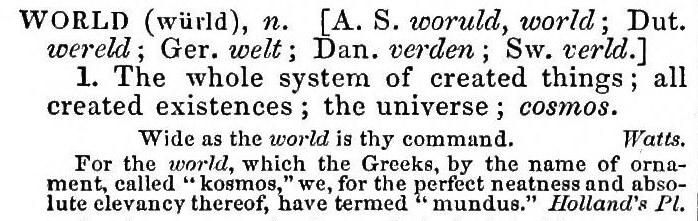



4. Older forms, still in use
Spellings going out of use in America but still printed, most of them still the English spelling. His later editions changed most of them.







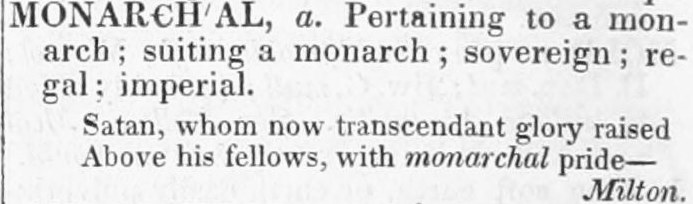









5. Usual then, odd now
Spellings that look English or old to an American today, and were the usual ones in American books of the 1850s.
 1855, page 18
 1855, the preface, page iii
 1855, page 30
 1855, page 14
 Worcester, 1860, pages xxvii–xxviii





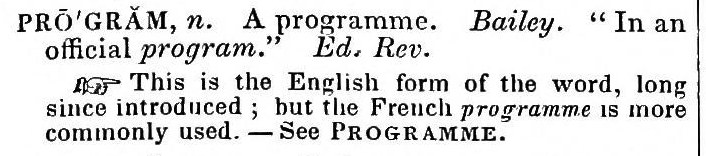







6. Rare then, set right later
Spellings a few other American books of the 1850s used, which no dictionary gave. Whether each was his habit or a slip of his pen or of the shop’s, we can’t tell. Later editions set them right.

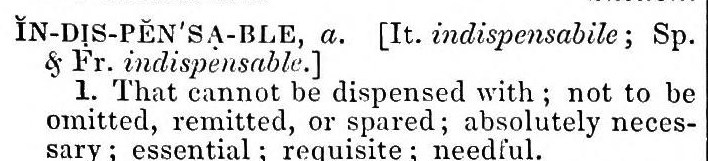






7. Slips
Mistakes the books themselves show to be mistakes.


8. What the editions did
The edition of 1856 set right the plain errors (indispensible, omniverous, developement, Echos, abode) and kept the older and English forms (behaviour but once, pedlar, deposite, mullen, centre).2
The edition of 1860, printed in Boston for Thayer and Eldridge, moved toward Webster: behavior, pedler, deposit, mastodon and violoncello, and polished and stuccoed without the apostrophe.2
From 1867 the apostrophe was his rule. The 1867 edition prints 581 kinds of word with ’d, against 717 spelled -ed, a count that also takes in words like red and hundred; the 1860 edition, of 456 pages, had 20. Some of 1860’s changes went back: mastadon and polish’d returned. In 1881 mullen became mullein, extatic became ecstatic, and kosmic joined kosmos.2
The changes of 1860 look like a Boston printer’s house style, and the ’d of 1867 like Whitman’s own choice. That is an inference from the books; no record of either printing that we have read says so. In 1888 he told Traubel of the ’d: “My ‘peculiarities,’ as your printers call them, hardly go further than this. I make a few rude departures—not many: on the whole I am conservative, travel the usual road.” Of his spellings that year: “They are not wrong—they are only my whims, oddities: as such I must let them pass.”15
9. What we don’t know
Some questions the sources don’t answer. Each is set down here with what we know, what we don’t, and what would settle it.
- Who chose each spelling in Rome’s shop. The manuals, his paying for the book and his being in the shop all point to his copy; no record of the shop says so.13,16 The manuscript he gave the printers would settle it, and we know of none that survives.
- Why loafe has an e. Perhaps to set the verb apart from the bread. That is a guess, and nothing he wrote says.
- Where the k of kosmos came from. Alexander von Humboldt’s book Kosmos is one lead, which we have not followed; his notes say only “Kosmos words.”11
- Whether sluff is a spelling of slough or a word for a sound. The line could be read either way.
- How common each form was in newspapers. The shares here are from books, read by machine; the Library of Congress’s newspaper search turned our automated reading away.18
- Whether wellbeloved and goodbye, each one word in the 1855 book, were usual so. Google’s counts may join words broken at the end of a line, so we left them out of the cards.
- Whether the ’d of 1867 was his rule or a printer’s. The proofs or his letters to the printers about them would settle it.
- Whether anyone has studied Whitman’s spelling as such. We found no study. James Perrin Warren’s Walt Whitman’s Language Experiment (1990), which we have not read, is the place to look first.
Sources
- W. Whitman, Leaves of Grass (Brooklyn, 1855), Library of Congress, Rare Book and Special Collections Division, Feinberg Whitman Collection copy 3: the cards’ lines are cut from its photographs. “The Library of Congress is not aware of any U.S. copyright or any other restrictions in the documents in this collection.” https://www.loc.gov/item/03023679/
- The Walt Whitman Archive, edited by Matt Cohen, Ed Folsom, and Kenneth M. Price: its transcriptions of Leaves of Grass, 1855 (the University of Iowa’s copy), 1856, 1860, 1867, 1871, 1881 and 1891–92 (TEI: ppp.00271, ppp.00237, ppp.01500, ppp.00473, ppp.00270, ppp.01663, ppp.00707), CC BY 4.0, read 2026-11-01. https://github.com/whitmanarchive/whitman-leaves_of_grass
- N. Webster, An American Dictionary of the English Language (New York, 1828), 2 vols., the Internet Archive’s scans: extasy, infinitesimal, indispensable (vol. 1); kelson, leak, mastodon, monarchal, mullen, omnivorous, violoncello, trouse (vol. 2). https://archive.org/details/americandictiona01websrich · https://archive.org/details/americandictiona02websrich
- N. Webster, An American Dictionary of the English Language, revised by C. A. Goodrich (Springfield: G. and C. Merriam, the text of 1847; this copy lacks its title page): the preface, on “fether”; the rules of spelling, p. lxxxi; free-trade among its added words. https://archive.org/details/websteramericand00webs
- N. Webster, A Compendious Dictionary of the English Language (Hartford and New Haven, 1806). https://archive.org/details/compendiousdictionaryoftheenglishlanguage1806
- J. E. Worcester, A Dictionary of the English Language (Boston, 1860): the orthography, pp. xxv–xxviii; the “Vocabulary of Words of Doubtful or Various Orthography,” pp. xxx–xxxiii; the entries, pp. 744, 848, 849, 1137, 1277, 1356 and 1683. https://archive.org/details/cu31924027443393
- J. E. Worcester, A Universal and Critical Dictionary of the English Language (Boston, 1846), p. xxvii. https://archive.org/details/cu31924027443336
- The Grolier Club, “Lexical Warfare,” from the exhibition of the collection of Bryan A. Garner. https://grolierclub.omeka.net/exhibits/show/lexicography/warfare
- H. L. Mencken, The American Language (New York, 1919), pp. 248–55. https://archive.org/details/americanlanguage00mencuoft
- Wisconsin, Laws of 1855, chapter 45. https://docs.legis.wisconsin.gov/1855/related/acts/45.pdf
- W. Whitman, An American Primer, ed. H. Traubel (Boston, 1904): the foreword, p. vii; pp. 6, 11–14. https://archive.org/details/americanprimer00whitrich
- J. P. Warren, “Dating Whitman’s Language Studies,” Walt Whitman Quarterly Review 1.2 (1983), 1–7. https://pubs.lib.uiowa.edu/wwqr/article/id/26382/
- T. F. Adams, Typographia, 4th ed. (Philadelphia, 1854), pp. 63, 189–91. https://archive.org/details/typographiaorpri00adam
- T. MacKellar, The American Printer, 6th ed. (Philadelphia, 1871), pp. 181, 183, 280–81. https://archive.org/details/americanprinter00mackgoog
- H. Traubel, With Walt Whitman in Camden: vol. 1, p. 248 (2 June 1888); vol. 2, pp. 244 (2 September 1888) and 471. https://archive.org/details/withwaltwhitmani01trauuoft · https://archive.org/details/withwaltwhitmani00trau2
- N. Gray, “Introduction to the 1855 Leaves of Grass Variorum,” §§ III–IV and note 116, at the Walt Whitman Archive, as kept by the Internet Archive’s Wayback Machine. https://web.archive.org/web/20200813170641/https://whitmanarchive.org/published/LG/1855/variorum/intro.html
- How Whitman made his books (stanza.pictures, 2026), and its sources. https://stanza.pictures/reading-room/whitman-as-printer
- Google Books Ngram Viewer, American English (2019), the years 1840–59, read 2026-11-01: a spelling’s share is its count against the count of all its spellings. https://books.google.com/ngrams
stanza · The reading room · November 2026