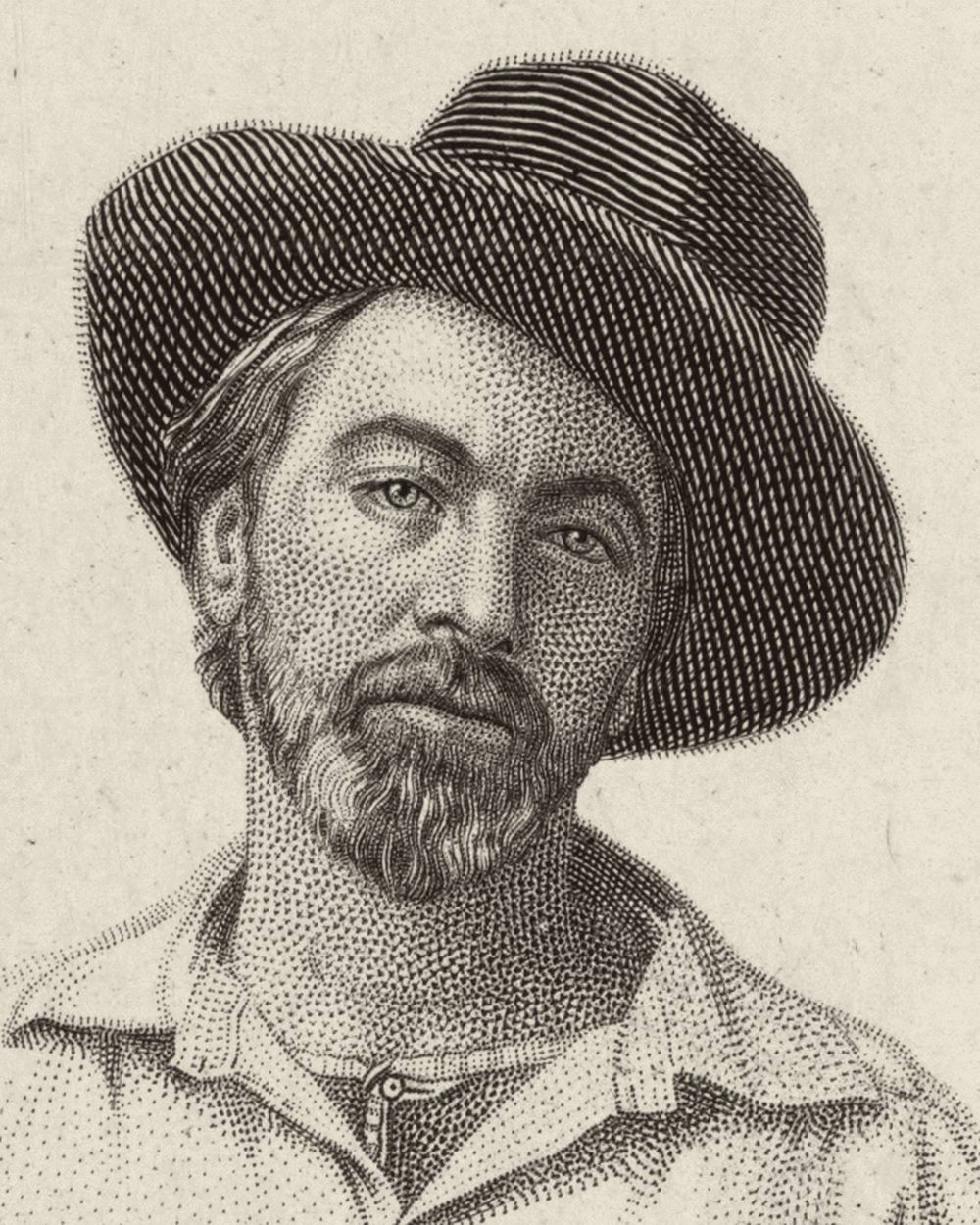
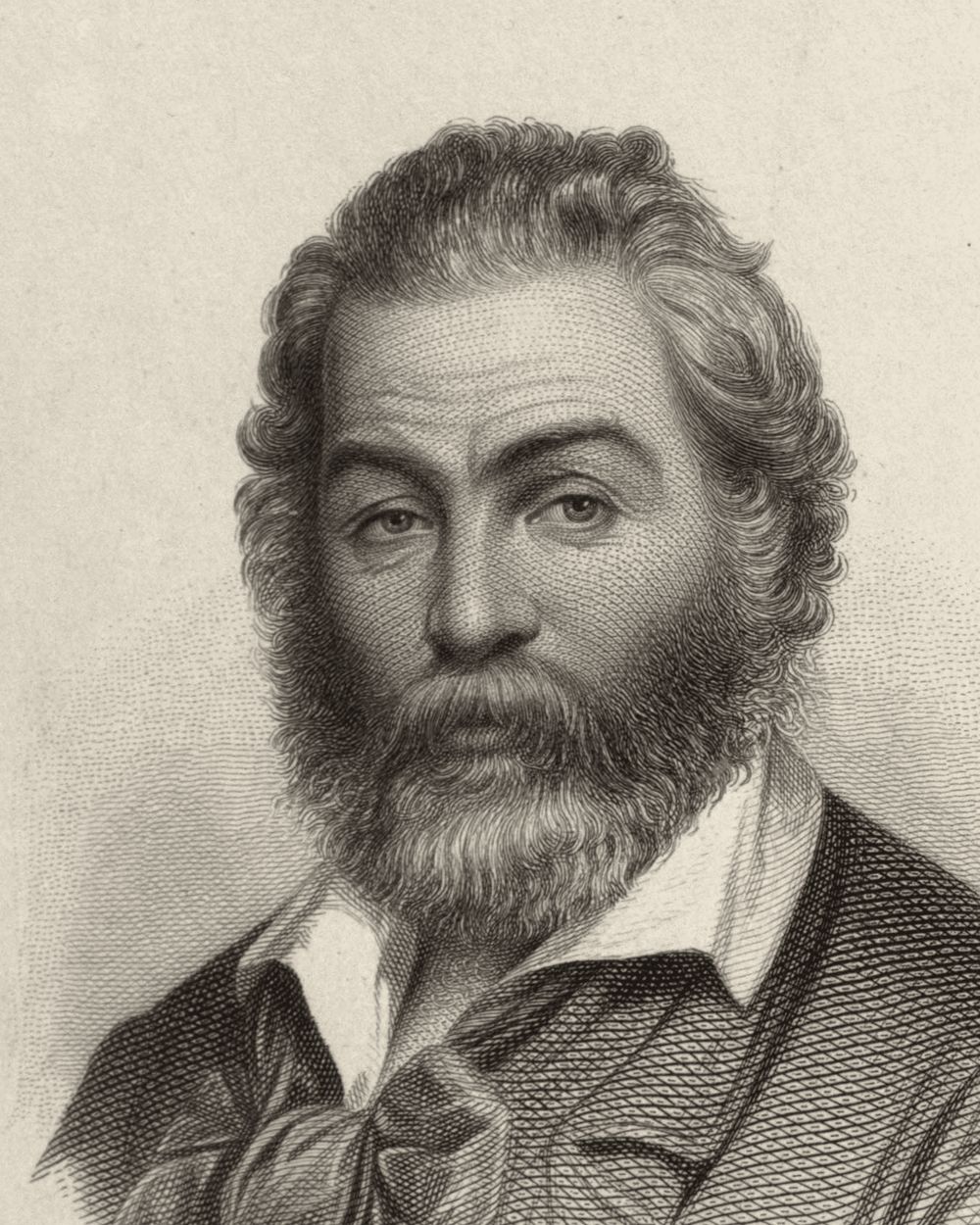
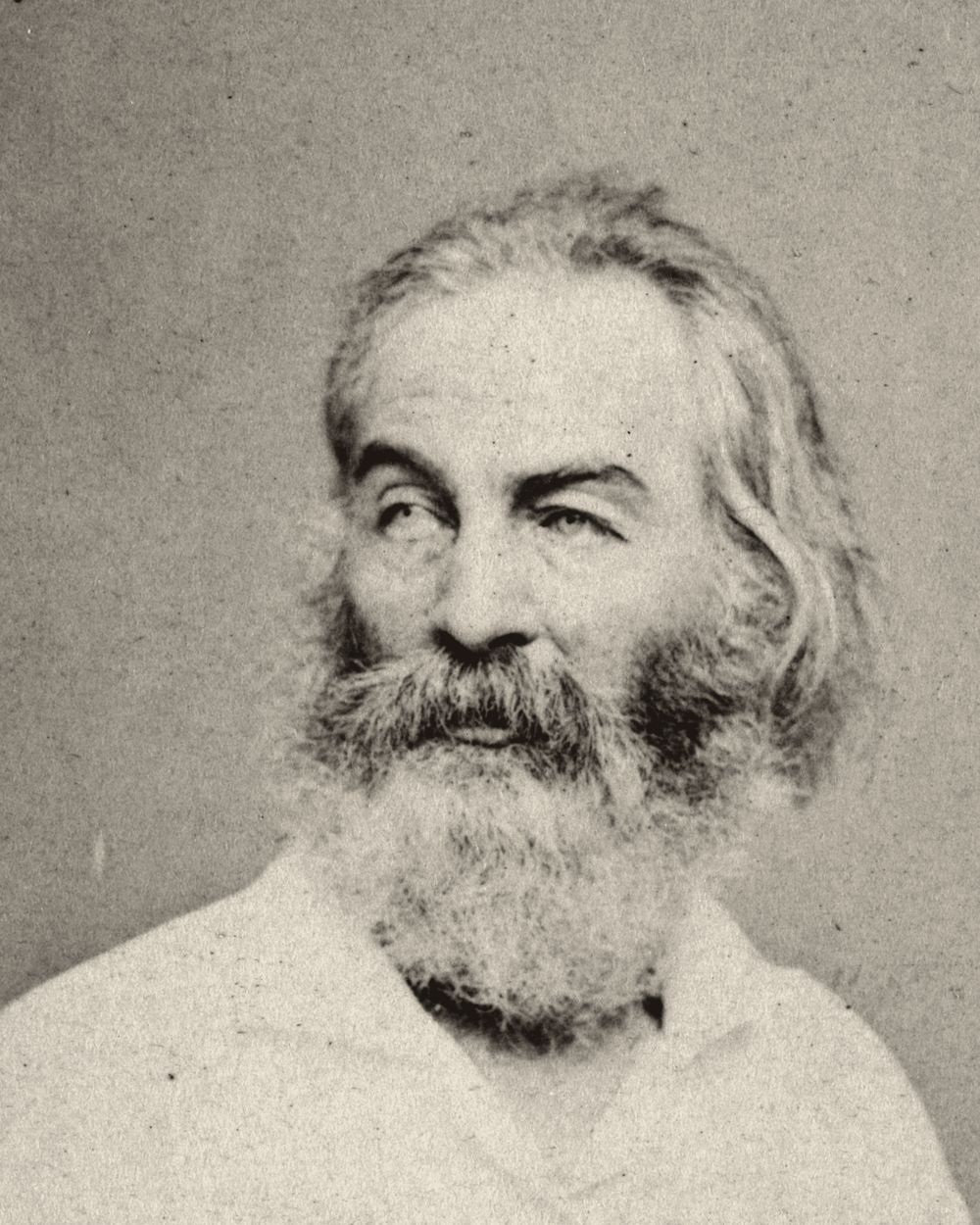
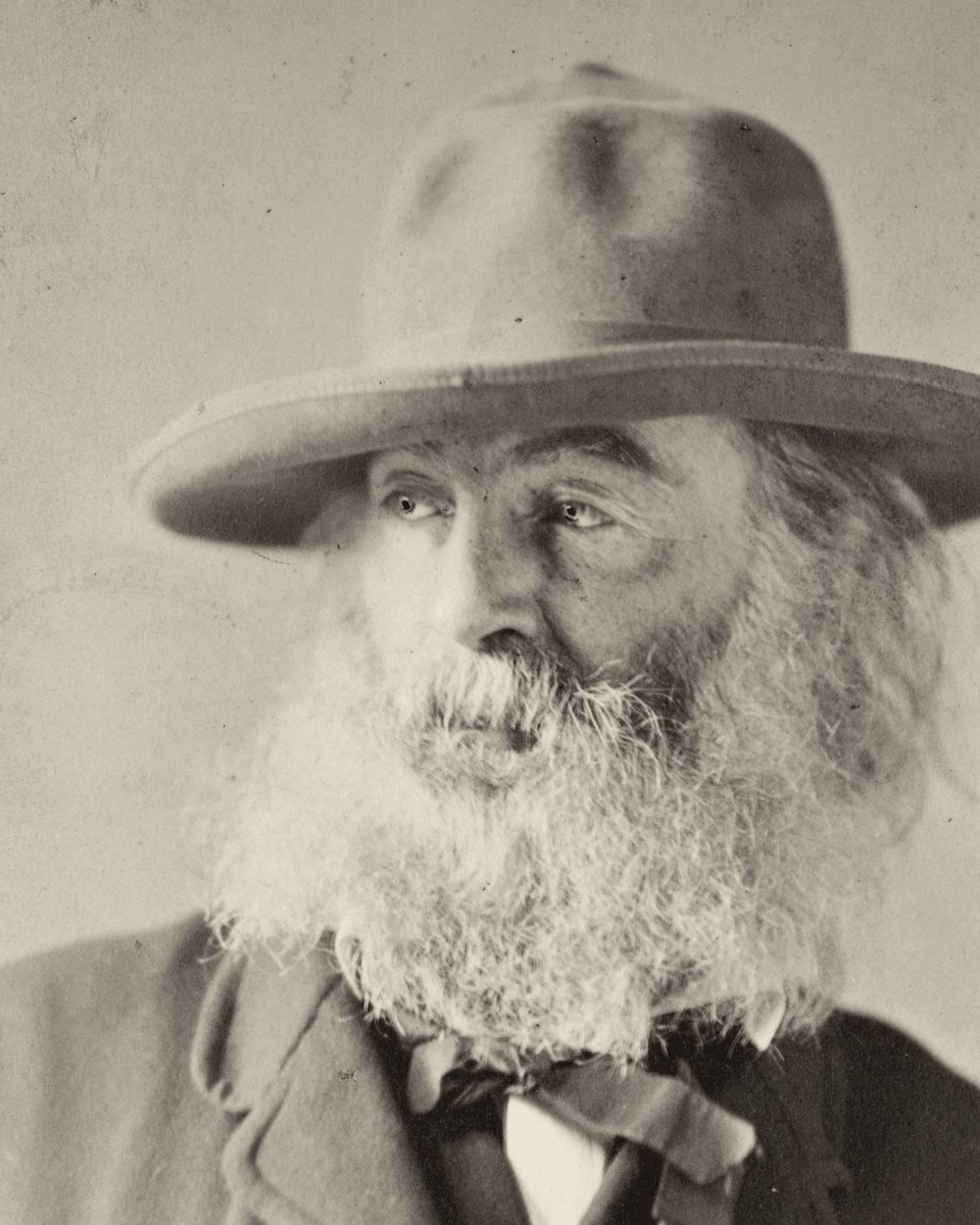
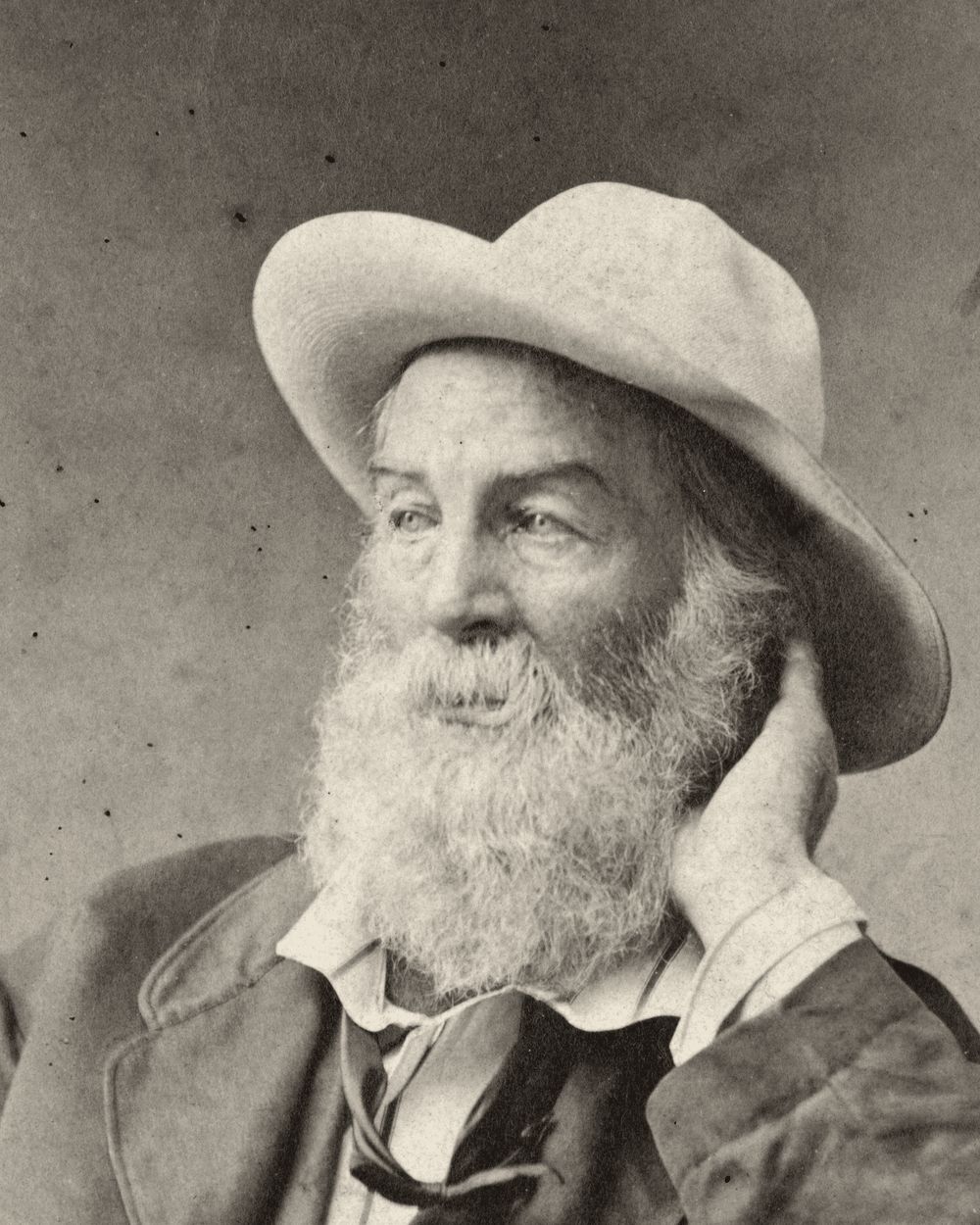
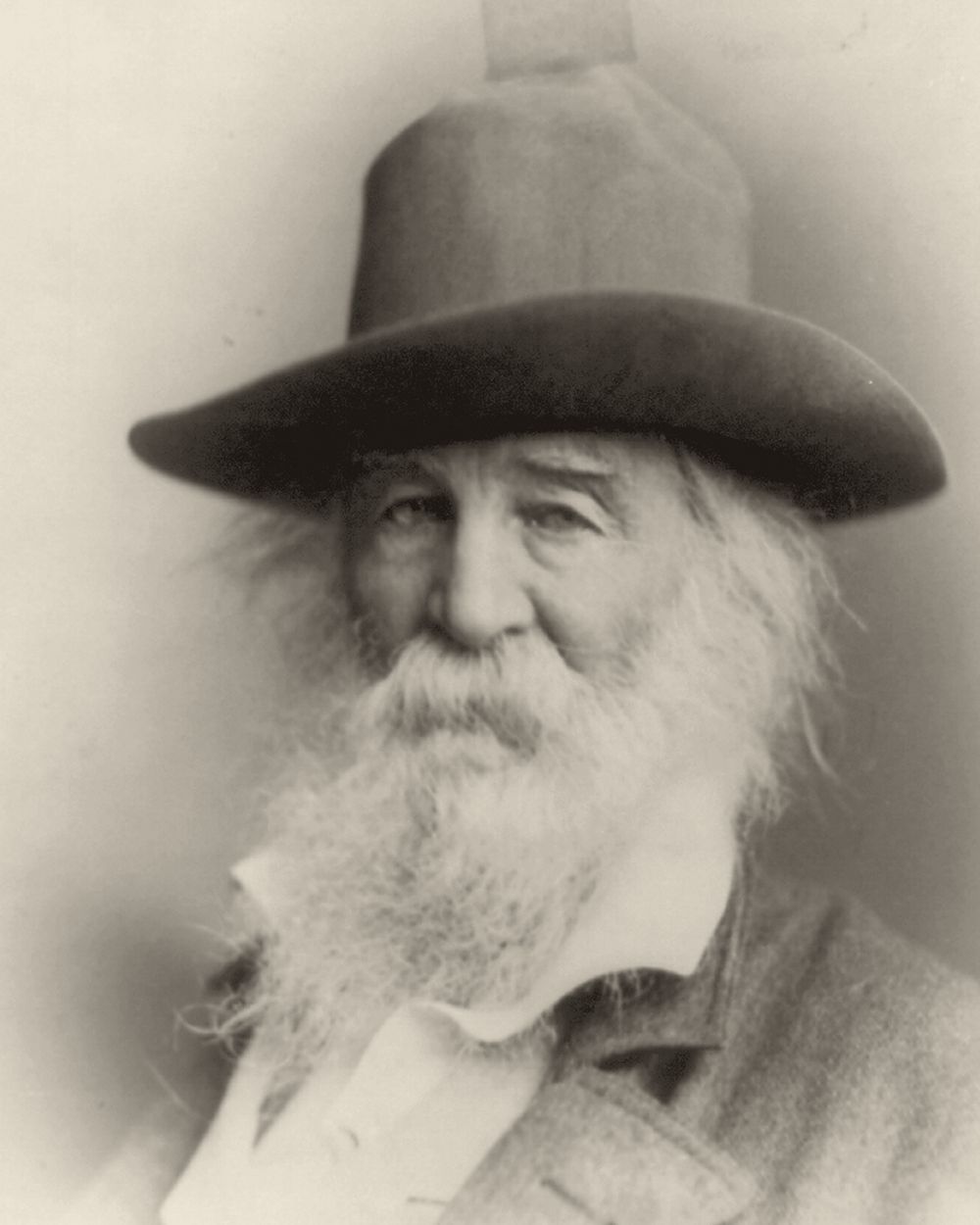
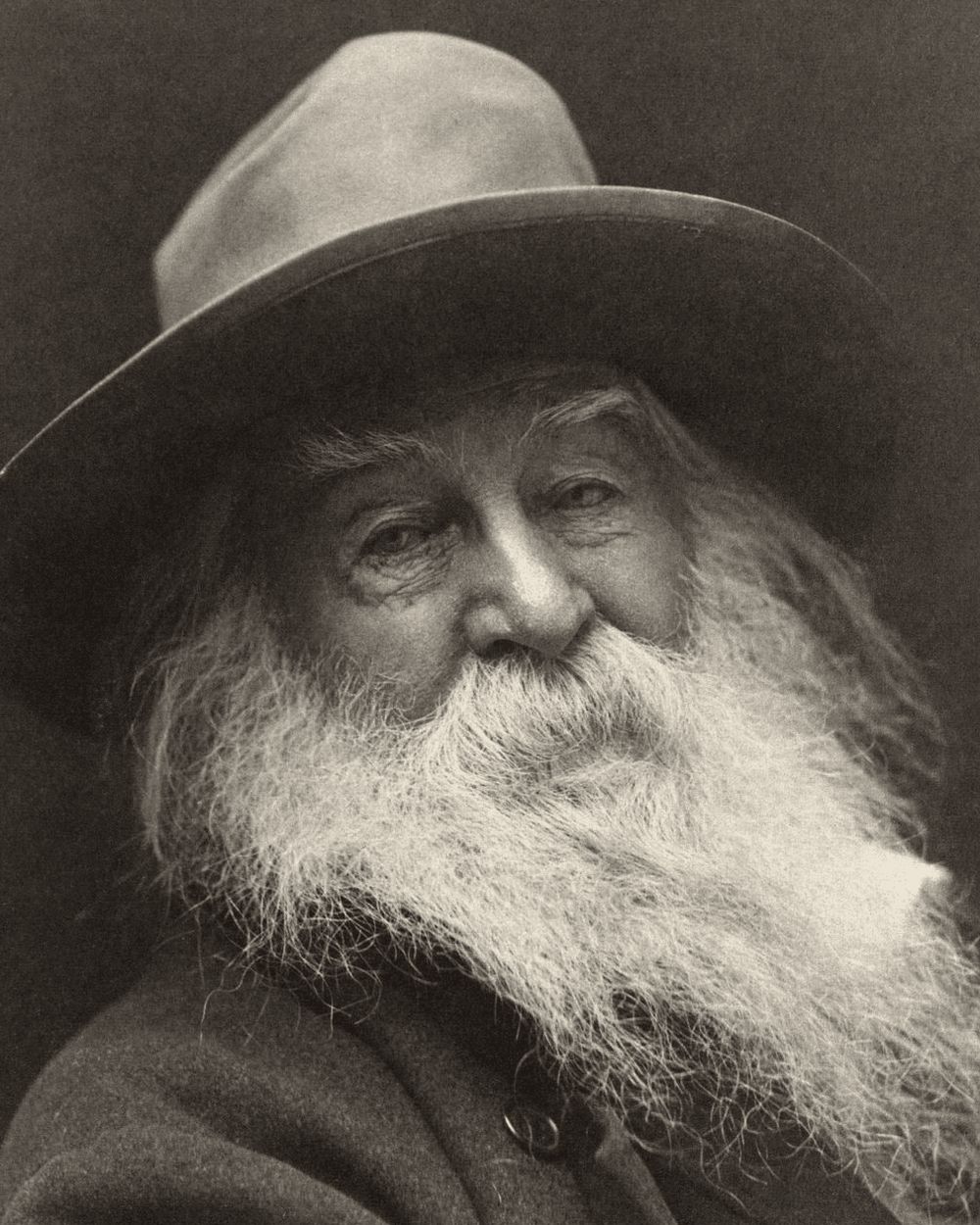
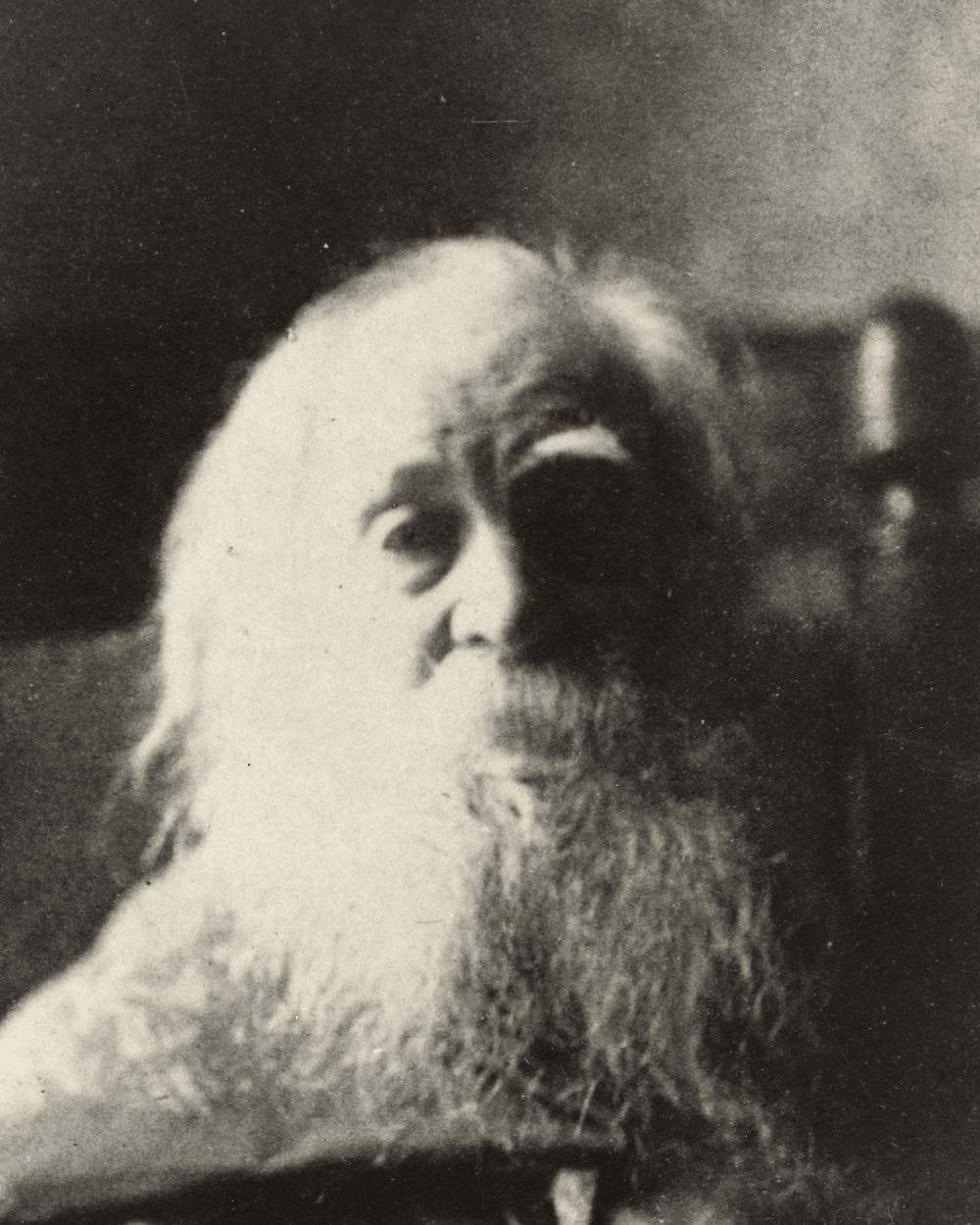
July 1854, at thirty-five: the engraving after Gabriel Harrison’s daguerreotype that faced the title page of 1855. Library of Congress.1860: Stephen Alonzo Schoff’s engraving after Charles Hine’s portrait, the frontispiece of 1860. Internet Archive, from a later printing of its plates.1862: Mathew Brady’s gallery, New York, a carte de visite. Library of Congress.1869: William Kurtz, Madison Square, New York. Library of Congress.1876: G. Frank E. Pearsall. Library of Congress.1881: a photograph by Gutekunst. Library of Congress.April 15, 1887, at sixty-seven: George C. Cox. Library of Congress, restored by Adam Cuerden.1891: Thomas Eakins. Library of Congress.
1855
Walt Whitman
The poet of Leaves of Grass, from 1855 to 1892
“… an attempt, from first to last, to put a Person, a human being (myself, in the latter half of the Nineteenth Century, in America,) freely, fully and truly on record.”
Twelve untitled poems in a tall quarto of 95 pages, printed by Andrew Rome. His name is not on the title page; his portrait faces it.
1856
Brooklyn · sold by Fowler & Wells
Poem of Walt Whitman, an American.
I celebrate myself,
Thirty-two poems, titled for the first time, in a fat pocket book of 384 pages, Emerson’s greeting stamped in gold on its spine.
1860
Boston · Thayer and Eldridge
Walt Whitman.
I celebrate myself,
146 new poems, the most he ever added at once: 456 pages, set just as he directed. “It is quite ‘odd,’ of course.”
1867
New York
Walt Whitman.
I celebrate myself;
Plain, with no portrait and no ornament. Six new poems in 338 pages, and Drum-Taps bound in at the back.
1871–72
Washington
Walt Whitman.
I celebrate myself;
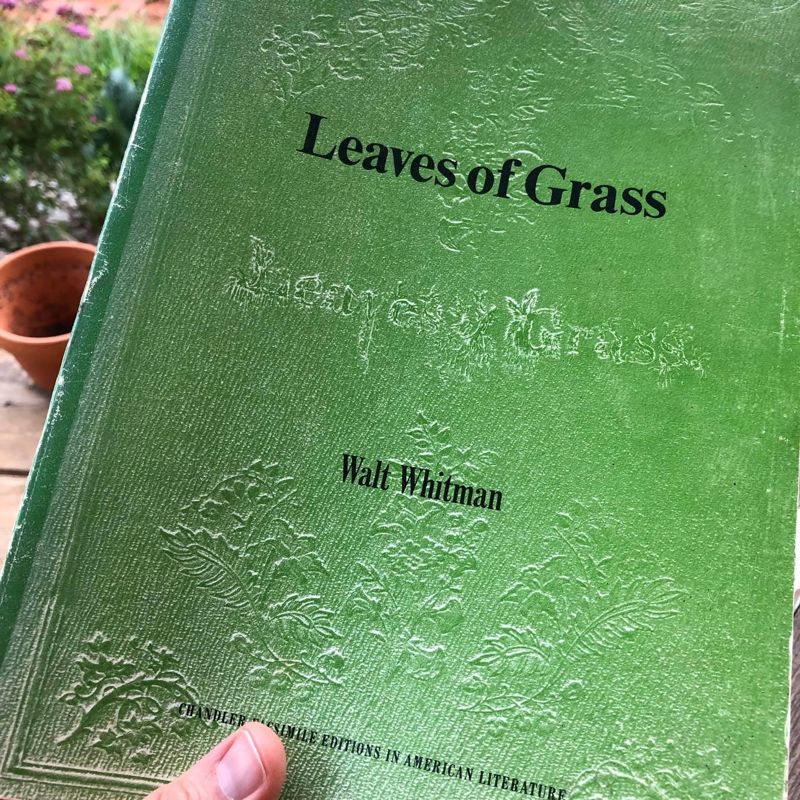
384 pages, “neatly done in green cloth.” In 1872 Passage to India was bound in behind them, 120 pages more.
1876
Camden · the Author’s Edition
Walt Whitman.
I celebrate myself;
From the plates of 1871, signed by him in each copy, with new poems printed on slips and pasted in.
1881–82
Boston · James R. Osgood and Company
Song of Myself
I celebrate myself, and sing myself,
293 poems in the order they keep from now on: 382 pages, “markedly plain & simple even to Quakerness.” Withdrawn in Boston in 1882.
1891–92
Philadelphia · David McKay
Song of Myself.
I celebrate myself, and sing myself,
389 poems in 438 pages: the plates of 1881, two annexes and a last essay. “I prefer and recommend this present one, complete, for future printing, if there should be any.”
During the war he visits the wounded in Washington’s hospitals.
He settles in Camden, New Jersey, for the last nineteen years of his life.
The plates stay as they are; his new poems go into annexes: Sands at Seventy in 1888, Good-Bye my Fancy in 1891.
1892
Camden
The last words of his book
“… the strongest and sweetest songs yet remain to be sung.”